


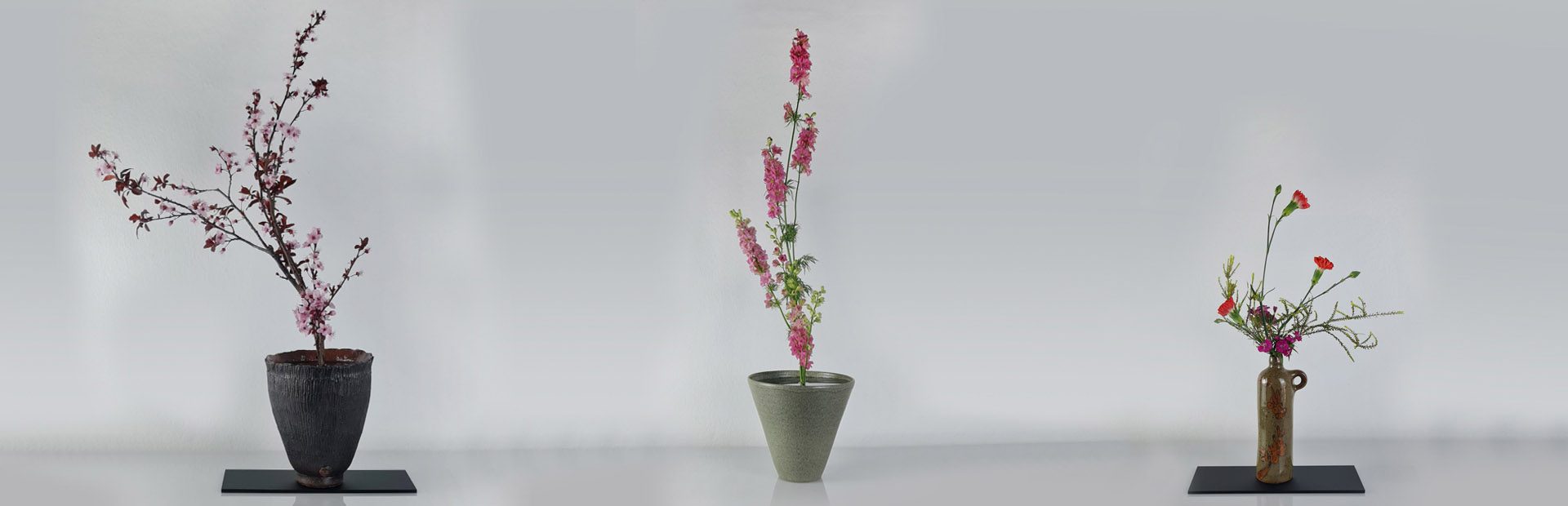
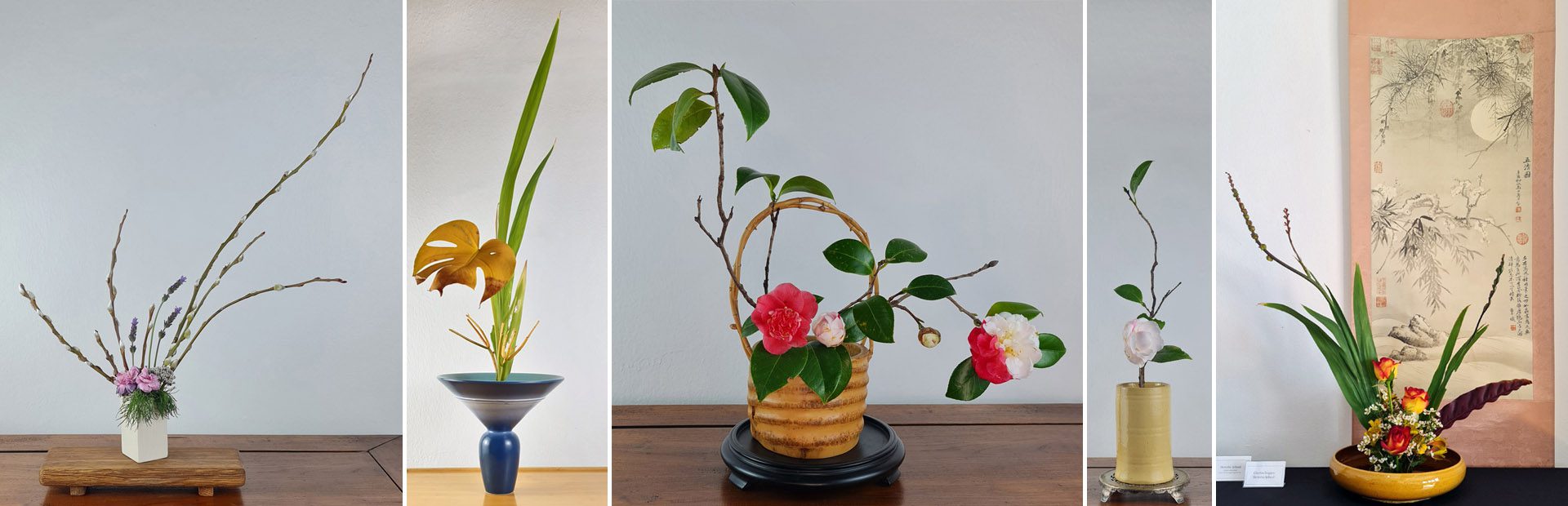
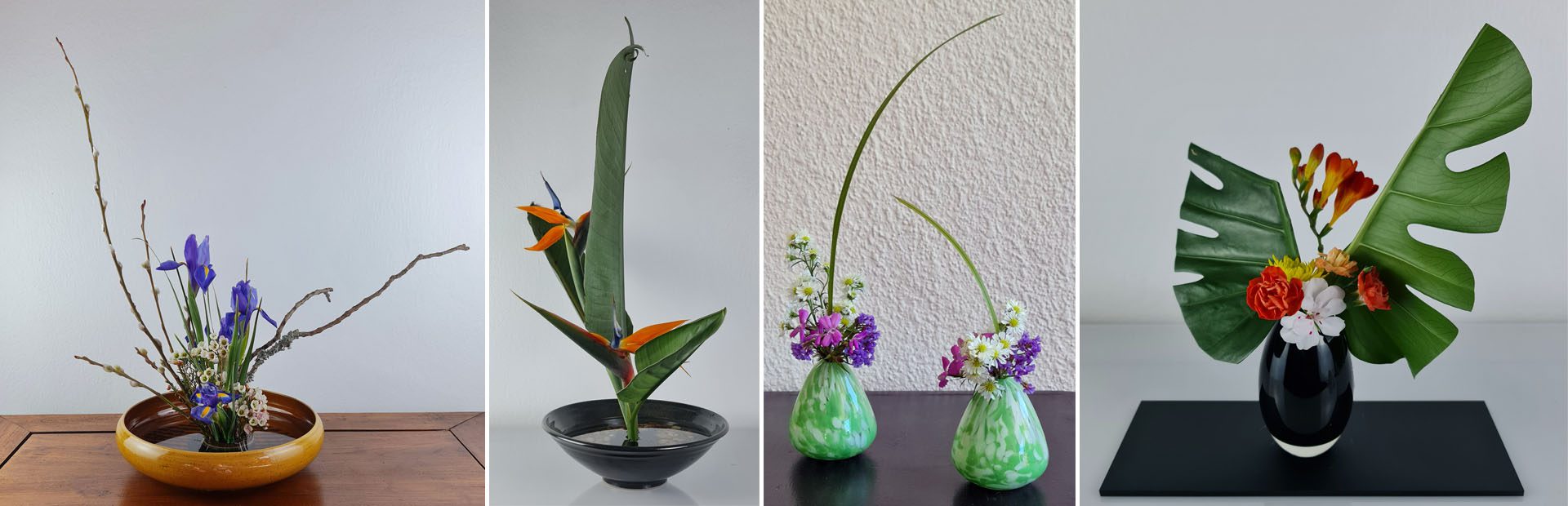
Meaning of Ikebana
Creating Ikebana means not merely putting plants into a vase. We seek to enhance the beauty of plants, whilst fully recognizing that we live in harmony with nature. Inspired by flowers seeking an aesthetic ideal, expressing our feelings through flowers, this is to create ikebana.
A plant living in nature is in harmony with its surroundings. Similarly, Ikebana values harmony that reflects the changing seasons and surroundings of the arrangement, the viewer and other factors. Displaying a hanging scroll and an ikebana work in the tokonoma (alcove in a traditional Japanese room) with no other decorative elements. Ikebana produces a silent world in this space – the beauty of the plants is enhanced by their surroundings, whilst enlivening the surroundings. We live in harmony with others. This idea is the feature of Ikenobo Ikebana, what we call the “Spirit of Harmony”.
3 Schools of Ikebana
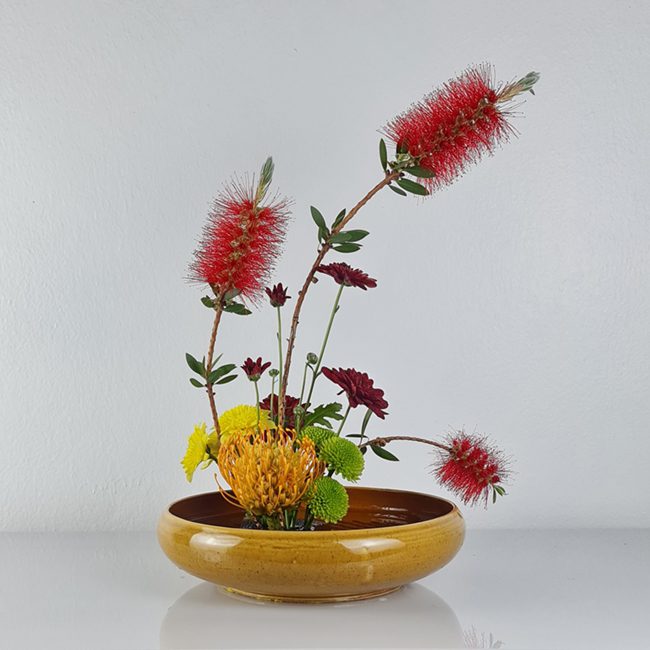
Ikenobo
The Ikenobō school is the oldest and most traditional school of ikebana, the Japanese art of flower arrangement, founded over 550 years ago in Kyoto. Its origins trace back to the 15th century at the Rokkakudō temple, where Buddhist priests known as “Ikenobō” (meaning “priest’s hut by the pond”) created floral offerings.

Ohara
The Ohara School of Ikebana is one of the major schools of Japanese flower arrangement, known for pioneering the moribana style. Founded in 1895 by Ohara Unshin, it broke from traditional vertical arrangements to create more natural, landscape-like designs using shallow containers.
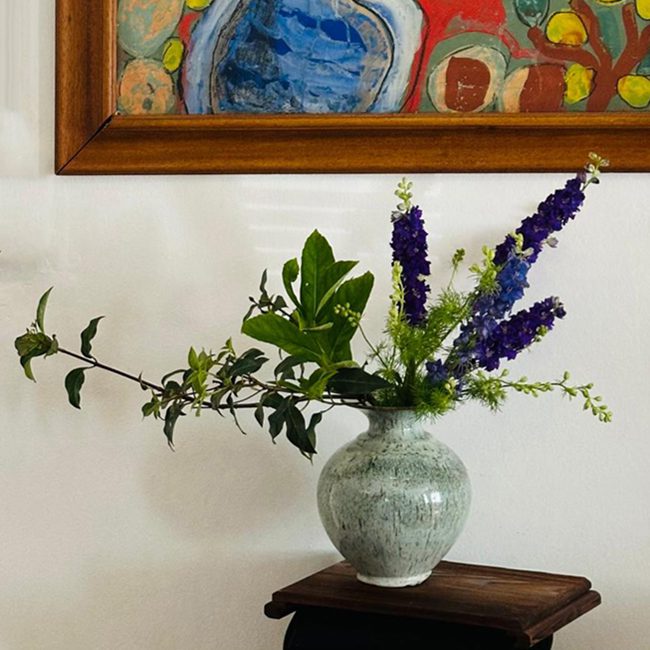
Sogetsu
The Sogetsu school of Ikebana is a modern and innovative style of Japanese flower arrangement founded in 1927 by Sofu Teshigahara. It emphasizes creativity, individual expression, and artistic freedom, with a guiding principle that anyone can create an arrangement “anytime, anywhere, with any material”.
About Ikebana South Africa
The aim of Ikebana South Africa is to formalise a space of learning of Ikebana and facilitate collaboration between South African chapters or clubs practicing Ikebana, and be a resource for persons that practice Japanese flower arrangement.
